Kyiv Launches Its First Domestic Guided Aerial Bombs
In a significant advancement for Ukraine’s military capabilities, a local enterprise has successfully developed the nation’s inaugural guided aerial bombs. These bombs are designed to deliver 250-kilogram warheads to targets several kilometers behind front lines, offering a domestic alternative to the less expensive yet highly effective glide bombs used by Russia, as announced by the Ukrainian Ministry of Defense on Monday.
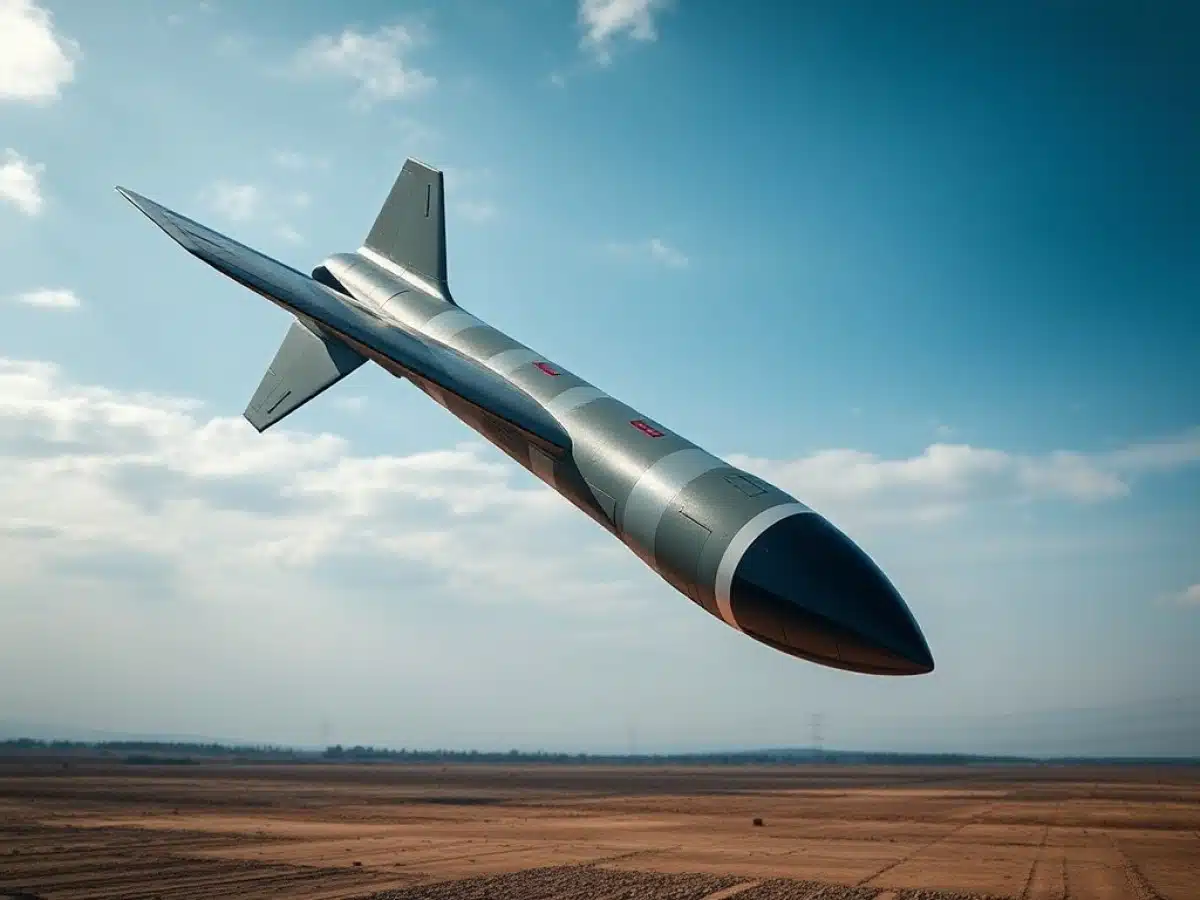
The newly developed weapon is characterized by its winged, engine-free design that allows it to be released from an aircraft at high altitudes and glide towards its target. The bomb’s trajectory is controlled via satellite guidance, enabling precise strikes while keeping the launch aircraft beyond the range of dense enemy air defenses. Compared to cruise missiles, these bombs are more cost-effective, can carry heavier payloads than most drones, and reduce the risk to aircraft.
Operational and Strategic Enhancements
Mykhailo Fedorov, Ukraine’s Minister of Defense, confirmed via a Telegram post that the guided bombs are combat-ready, with an initial batch already purchased by the Ministry and soon to be deployed on the battlefield. “Ukraine is transitioning from relying on imported arms to developing indigenous, advanced weaponry. This shift not only bolsters our Defense Forces but also secures a technological edge in combat scenarios,” stated Fedorov.
Previously, Ukraine lacked its own precision glide bombs and depended heavily on limited supplies of advanced munitions from Western allies, such as the JDAM-ERs from the USA, ATACMS missiles, British Storm Shadows, and French SCALP-EG cruise missiles. The introduction of these indigenous bombs allows Ukraine to engage more actively at medium ranges while preserving its stock of longer-range Western missiles for critical targets, reflecting a broader strategy to leverage technology to tilt the war dynamics in its favor against a larger, better-funded adversary.
“Our approach is to escalate the deployment of solutions that enhance the reach and precision of our strikes, fundamentally altering the dynamics of modern warfare,” added Fedorov.
Behind the Development of Ukraine’s Guided Bombs
The development of this critical munition began 17 months ago by DG Industry, a relatively obscure Ukrainian company operating under the auspices of the state-supported defense innovation hub, Brave1. The design team faced numerous challenges, including creating guidance systems resilient to Russian electronic warfare, stabilizing the airframe across various speeds and altitudes, and ensuring compatibility with different types of aircraft, as per Brave1’s disclosures.
The design and functionality of the Ukrainian guided bombs differ markedly from similar munitions, such as Russia’s UMPK-equipped FAB bombs, which are essentially old bomb bodies fitted with glide kits. Unlike these, the Ukrainian bombs are purpose-built with a complete airframe, not merely modified with add-on kits.
“This isn’t merely a replication of Western or Soviet models; it’s an innovative creation by Ukrainian engineers designed for the effective neutralization of enemy fortifications, command centers, and other key targets deep within enemy lines,” Fedorov explained.
Strategic Advantages of Glide Bombs
Glide bombs provide several tactical benefits. They engage targets from a standoff distance, appearing over their target only seconds before impact, thus giving enemy air defenses minimal time to respond. They are also challenging to detect and track, moving at speeds, arcs, and altitudes that differ from typical threats air defense systems are calibrated to intercept, according to NATO’s Joint Air Power Competence Centre.
From the Ukrainian perspective, the threat posed by Russian glide bombs, dropped from Su-34s outside the range of Ukrainian air defenses, is well recognized. These bombs are unpowered, small, and difficult to detect, making them a formidable challenge to counter.
The frequent use of these bombs by Russia, with more than 250 guided aerial bombs dropped daily on Ukrainian forces and civilian areas, underscores their strategic impact. Recent attacks in Kramatorsk resulted in civilian casualties, highlighting the lethal effectiveness of these weapons, which Ukrainian President Volodymyr Zelenskyy has described as among the most dangerous tools in Russia’s arsenal since their regular deployment began in 2023.
The cost disparity between manufacturing these bombs and the expense involved in intercepting them, exemplified by the millions required for a single Patriot missile compared to the tens of thousands to produce a FAB bomb, illustrates the economic challenge. Ukraine’s new glide bomb aims to impose similar cost inefficiencies on Russia.
“Soon, these Ukrainian guided aerial bombs will be utilized against enemy positions,” the Ministry of Defense concluded, marking a new phase in Ukraine’s defense strategy.
Similar Posts:
- Ukraine’s Game-Changer: Gripen-Meteor Combo Could Outmatch Russian Glide Bombs!
- Interceptor Drones Revolutionize Air-Defense: Ukraine Gains Economic Edge
- Ukraine War: Victory Day Ceasefires Collapse Immediately Amid Conflict
- Ukraine’s Drone Success: Over 80% of Enemy Targets Destroyed
- Ukraine’s Latest Weapon Floats into Russia: How Wind-Powered Strikes Are Changing Warfare

Jamal Peterson reports on defense, aerospace, and tech policy. With a military background and a strategic mind, he dissects complex subjects with clarity, offering readers sharp, reliable insights.