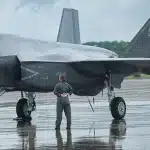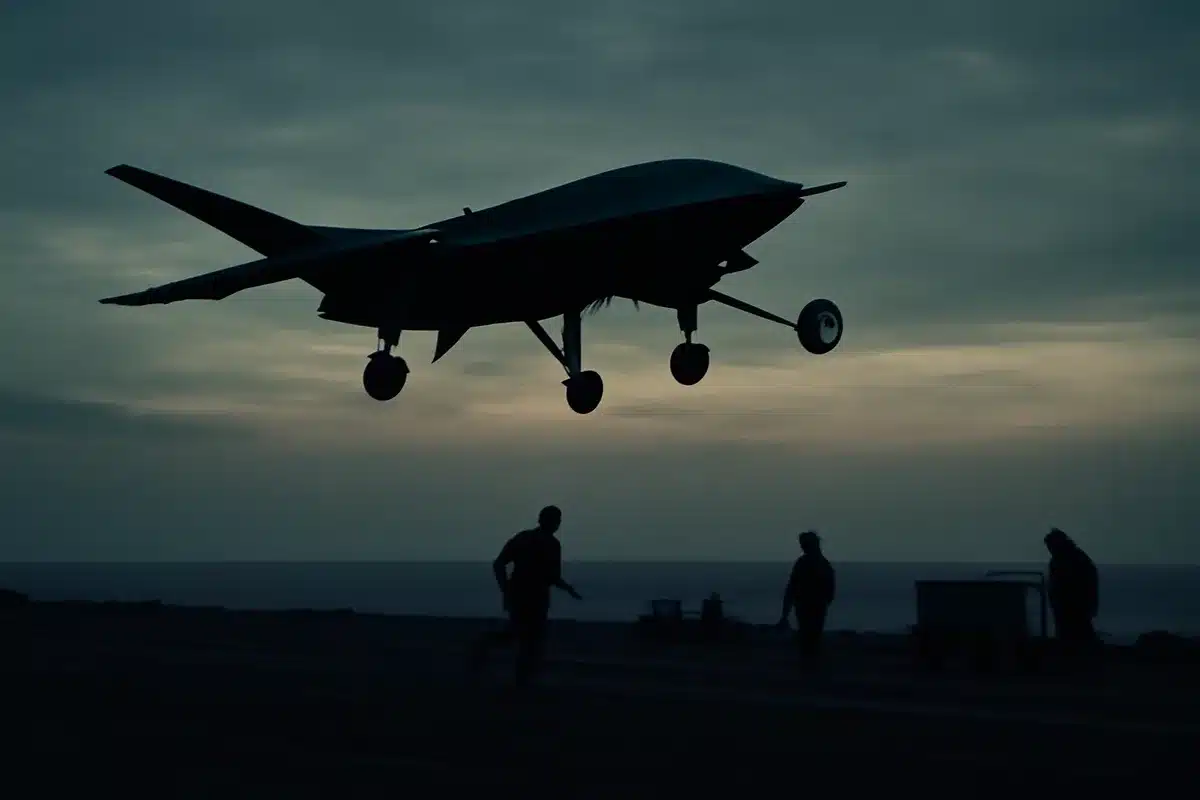
On Monday, the Navy initiated a significant step in advancing its aerial capabilities by granting Boeing a $562 million fixed-price incentive contract. This contract marks the commencement of the Low Rate Initial Production (LRIP) Phase 1 for the MQ-25A Stingray, an unmanned aerial refueling tanker, as announced by the military service.
During a Senate Armed Services Committee Hearing in May, Hung Cao, the Acting Secretary of the Navy, disclosed plans for the LRIP and its forthcoming deployment. The MQ-25A Stingray, developed by Boeing, is set to be the first unmanned tanker for the Department of Defense and the first operational carrier-based unmanned aircraft for the Navy.
The primary role of this unmanned aerial vehicle (UAV) is to enhance the operational lifespan of the Navy’s F/A-18 Super Hornets by taking over the aerial refueling duties, thereby allowing the fighter jets to concentrate on their primary strike missions.

According to a report from the Government Accountability Office in August, the Stingray is expected to deliver at least 14,000 pounds of fuel across a range of 500 nautical miles, which mirrors the refueling capacity of the Super Hornets.
The awarded contract encompasses the production of three MQ-25As during the LRIP Lot 1 phase and also includes funds for additional components necessary for three Lot 2 MQ-25As, according to a statement from the Navy. The first deliveries from Lot 1 are anticipated in 2029. The overall MQ-25 program envisions a fleet comprising 67 operational aircraft alongside nine test units.
Despite encountering several setbacks in the MQ-25 program, Boeing is proceeding with the production. The Navy achieved a milestone with its inaugural successful test flight of the Stingray on April 25, although this event occurred a year later than initially planned. Flight testing is expected to continue throughout the current year.
A recent Modernized Selected Acquisition Report from the Pentagon, dated April 2026, outlined a somewhat bleak outlook regarding the timeline of the MQ-25, attributing the delays to technical challenges and a labor strike by the Boeing Union.
This report also anticipates that the UAV could achieve its initial operational capability by 2029, which is four years behind the original schedule.
An additional milestone was achieved in March when the USS Theodore Roosevelt was outfitted as the first Navy carrier to include an Unmanned Air Warfare Center, designed to support the MQ-25A operations.

The development of the Navy’s Stingray program has been intricate, evolving significantly from its inception to its current phase of production.
Initially conceptualized as the Unmanned Carrier Launch Airborne Surveillance and Strike (UCLASS) platform with ISR and strike capabilities, both the Pentagon and the Government Accountability Office urged the Navy to refine and narrow the focus of the program. Consequently, by 2016, the mission had shifted towards a dedicated carrier-based UAV refueling role.
Similar Posts:
- Boeing Wins Big: Selected to Build US Navy’s Next-Gen F/A-XX Fighter!
- $5.1 Billion Overhaul: USS Harry S. Truman Aircraft Carrier Set for Mid-Life Upgrade!
- Navy’s Massive Drone Deal: Top Five Defense Contractors Secure Lucrative Contracts!
- $131 Billion Deal Sealed: Boeing to Ramp Up F-15 Production, Modernization
- US Navy F/A-18 Super Hornet Disables Oil Tanker: Tensions Rise in Gulf of Oman

Jamal Peterson reports on defense, aerospace, and tech policy. With a military background and a strategic mind, he dissects complex subjects with clarity, offering readers sharp, reliable insights.