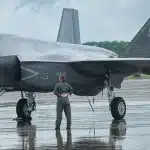
Boeing has won the contract to construct the U.S. Navy’s next-generation carrier-based strike fighter, known as F/A-XX, outpacing its main rival Northrop Grumman in the final stages of the selection process.
The agreement, valued at $20 billion for the comprehensive development phase, involves producing several test aircraft for various types of evaluations including ground and airworthiness tests, as well as systems and weapons integration, according to a statement from the Pentagon.

“The F/A-XX program is pivotal in our strategy to maintain peace through superior strength,” stated Michael P. Duffey, under secretary of defense for Acquisition and Sustainment. “The F/A-XX will control contested skies, broaden operational range, and offer critical combat benefits to our troops.”
Boeing has committed to ensuring the F/A-XX will have an increased range to enhance power projection from U.S. carriers and will be capable of operating in conjunction with both manned and unmanned systems, including Collaborative Combat Aircraft.

“This milestone heralds a new chapter for the U.S. Navy,” declared acting Secretary of the Navy Hung Cao. “This Sixth-Generation fighter represents a significant advancement in aerial dominance and will equip the finest pilots with unmatched capabilities to ensure their success and safety in combat. We look forward to working with Boeing and maintaining our aerial supremacy against adversaries.”
This contract signifies a major triumph for Boeing, solidifying its dominant position in the field of sixth-generation fighter technology across various military branches.
Previously, in 2025, Boeing had outcompeted Lockheed Martin for the contract to develop the U.S. Air Force’s sixth-generation fighter under the Next Generation Air Dominance program, also known as NGAD.
That aircraft, now referred to as the F-47, has moved into its engineering and manufacturing development phase, as announced by a service official in July, with initial flights anticipated to commence by 2028.
The Air Force has announced intentions to acquire at least 185 of these next-generation fighters, aiming to replace the F-22 Raptor fleet.
The F/A-XX program, still awaiting its formal designation, has been under scrutiny due to funding issues and engineering and supply chain concerns, leading some Pentagon officials to propose a delay in its advancement.
This carrier-based jet is set to be a cornerstone of the Navy’s future fighter fleet, operating alongside the F-35, and is expected to replace the older F/A-18E/F Super Hornets and EA-18G Growlers starting in the 2030s.
“We are honored to be chosen to build the Navy’s first sixth-generation platform,” said Steve Parker, president and CEO of Boeing Defense, Space & Security. “With decades of experience, backed by groundbreaking innovations and recent investments in state-of-the-art facilities designed for versatile, next-generation product development, our capable and committed team is prepared to lead this crucial project.”
Similar Posts:
- F-47 Test Aircraft Production on Track: First Flight Set for 2028!
- US Navy and Boeing Seal Deal on First MQ-25A Stingray Drones: Revolutionizing Aerial Refueling!
- Breaking News: US Navy’s Next-Gen Fighter Decision Imminent, Sources Reveal
- Navy’s Massive Drone Deal: Top Five Defense Contractors Secure Lucrative Contracts!
- Saab to Lead Development on Sweden’s New Flagship Fighter Jet: A Glimpse into Advanced Warfare Tech

Jamal Peterson reports on defense, aerospace, and tech policy. With a military background and a strategic mind, he dissects complex subjects with clarity, offering readers sharp, reliable insights.