Implementing a U.S. naval blockade against Iran represents a significant and indefinite military operation that might provoke new reprisals from Tehran and exacerbate tensions in a currently unstable truce, according to experts.
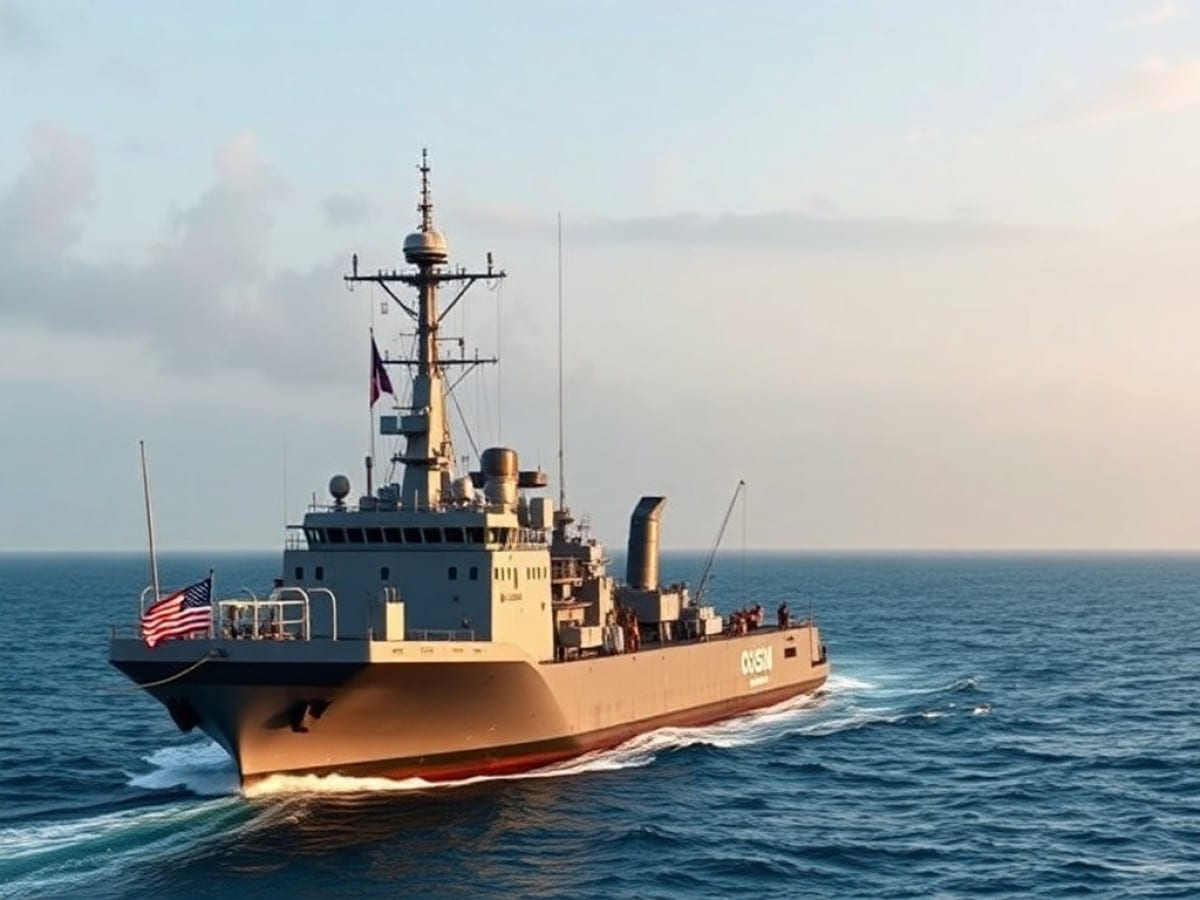
Following unsuccessful peace negotiations in Islamabad over the weekend, President Donald Trump announced via social media that the U.S. Navy is set to initiate a blockade, preventing any vessels from entering or exiting the Strait of Hormuz.
The military’s Central Command later clarified that the blockade would specifically target vessels traveling to or from Iran, affecting all Iranian ports along the Arabian Gulf and the Gulf of Oman, starting Monday at 10 a.m. Washington time, according to CENTCOM.
Trump also mentioned that U.S. forces will intercept any ships that have paid dues to Iran, even if these ships are currently in international waters.
“Any vessel that pays an illegal fee will not be allowed safe transit in international waters,” Trump declared on Truth Social.
Trump’s ultimate aim with this strategy is to coerce Iran into lifting its de facto blockade of the strait, a critical artery for global oil shipments where approximately 20% of the world’s oil passes through, currently accessible only to nations authorized by Tehran.
Should the strategy prove effective, it would neutralize Iran’s primary bargaining chip in its dealings with the U.S. and reopen the strait for international trade, possibly leading to reduced oil prices. However, experts argue that a blockade is tantamount to an act of war and would necessitate a prolonged deployment of numerous warships.
“Trump is looking for a quick solution. However, this operation is challenging to carry out alone and likely cannot be sustained over the long-term,” stated Dana Stroul, a former senior Pentagon official in the Biden administration now with The Washington Institute for Near East Policy.
POSSIBLE RESPONSES FROM IRAN
Details about the U.S. military’s planned blockade, such as the number of warships involved, the use of warplanes, or the participation of Gulf allies, remain undisclosed. Central Command has not replied to inquiries for further information.
Experts suggest that with an adequate naval presence, the U.S. could effectively deter commercial tankers from attempting to navigate through with Iranian oil.
However, questions arise about whether the U.S. is prepared to board, seize, damage, or even sink vessels that defy the blockade, especially if these belong to major powers like China or allies such as India and South Korea.
Furthermore, what actions might Iran take? Retired Admiral Gary Roughead, a former U.S. Chief of Naval Operations, expressed concerns that Iran might target ships in the Gulf or attack infrastructure in Gulf states hosting U.S. forces.
“I truly believe that if we initiate this, Iran will respond in some form,” Roughead predicted.
Since the U.S.-Israel conflict began on February 28, threats from Iran have propelled global oil prices to increase by approximately 50%.
Trump acknowledged on Sunday that oil and gas prices might remain high in the U.S. through the upcoming midterm elections in November, a situation that could potentially lead to a loss of Republican control in Congress if public dissatisfaction grows. The conflict has already proven unpopular.
CONCERNS OVER FUEL COSTS
Aggravated by Iran’s refusal to end the conflict on his terms, Trump also hinted at possibly resuming U.S. airstrikes within Iran, targeting missile production sites among other locations.
U.S. Senator Mark Warner from Virginia, a leading Democrat on the Senate Intelligence Committee, criticized the strategy, pointing out that Iran could deploy speedboats to lay mines in the strait or attach explosives to tankers.
“How will this strategy help in reducing gas prices?” Warner questioned during an appearance on CBS’s “Face the Nation.”
Despite thousands of U.S. military strikes significantly weakening Iran’s military capabilities, analysts note that Iran remains a persistent challenge for the U.S., with a more hardline government and a hidden cache of highly enriched uranium.
Trump issued a stark warning on Sunday, stating that “any Iranian who fires at us, or at peaceful vessels, will be BLOWN TO HELL!”
In response, Iran’s Revolutionary Guards issued a statement declaring that any military vessel nearing the strait would be seen as a violation of the ceasefire and dealt with severely and decisively, highlighting the potential for a dangerous escalation.
Stroul emphasized that resolving this crisis would necessitate a prolonged, international effort focused on diplomacy and political resolve.
Similar Posts:
- US Navy F/A-18 Super Hornet Disables Oil Tanker: Tensions Rise in Gulf of Oman
- France Deploys Aircraft Carrier to Red Sea: Eyes Strategic Hormuz Mission
- Iran’s Stark Warning to Gulf States: Comply with US and Face Severe Consequences
- Iran’s Leader Declares ‘Full-Fledged’ War with US, Israel, Europe: Tensions Escalate
- Iranian Warships Seek Refuge: Strategic Moves in India and Sri Lanka

Jamal Peterson reports on defense, aerospace, and tech policy. With a military background and a strategic mind, he dissects complex subjects with clarity, offering readers sharp, reliable insights.