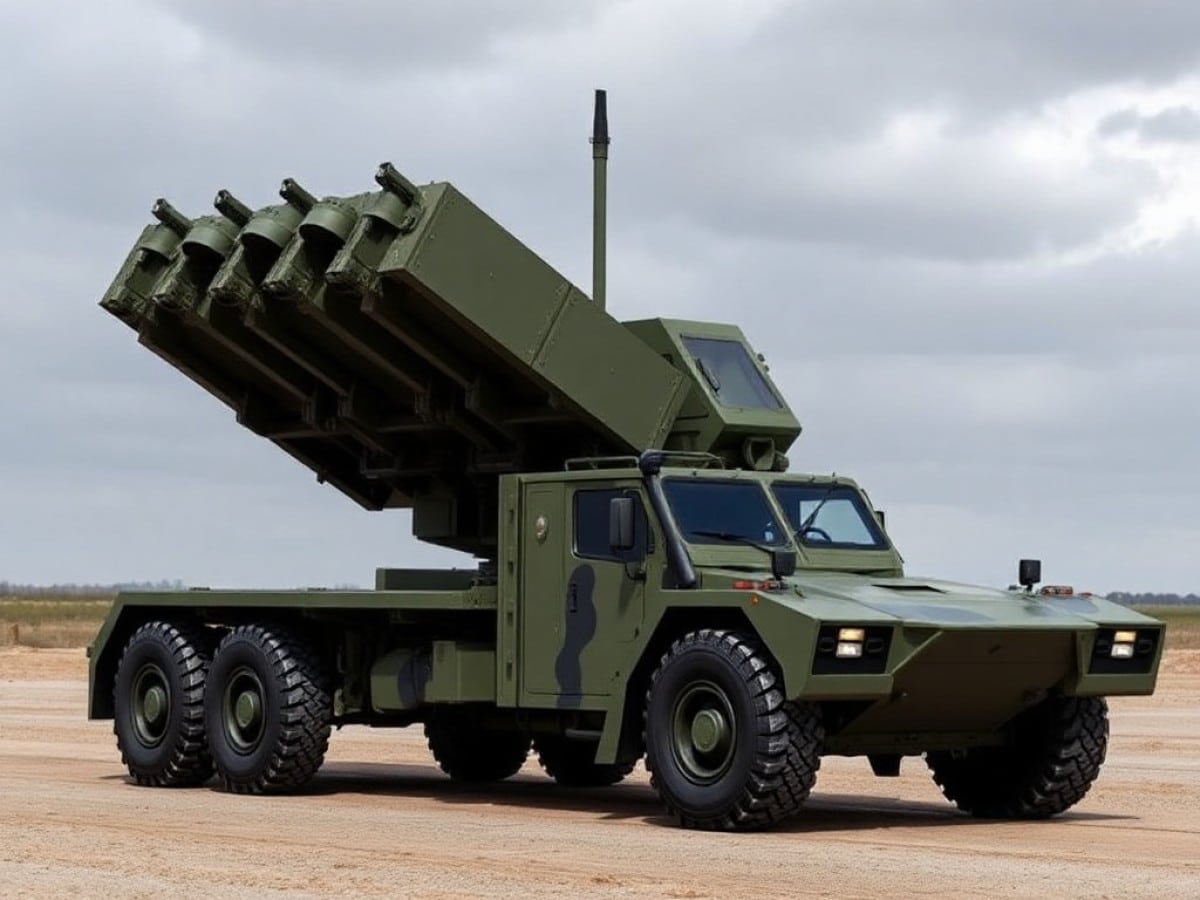
CHRISTCHURCH, New Zealand — Last month, Australia conducted a groundbreaking trial of a new type of medium-range air defense system, which blends both existing and innovative technologies in a manner not previously seen.
Australia has been slow to enhance its ground-based air defense capabilities but has now, with help from the United States, started to focus on a composite approach that utilizes sensors, software, and weaponry already owned by Australia.
This pioneering integration, which included the successful launch of an SM-2 interceptor missile, presents an alternative to investing in costly systems like the Patriot air defense systems.
According to a press release from the Department of Defence, the SM-2 test was the culmination of intensive collaboration, innovation, and engineering, resulting in this effective prototype.
The development involved significant contributions from Lockheed Martin and the U.S. Navy.
Integral Component
During the Exercise Taipan Strike 2026, the SM-2 was fired from a trailer-mounted launcher known as the Expeditionary Launch System, at the Woomera testing range in southern Australia.
The missile, tasked with intercepting a BQM-74E target drone, was controlled by a virtualized version of Lockheed Martin’s Aegis combat system and was guided by a phased-array radar developed by the Australian company CEA Technologies.
Aegis, traditionally used on warships, was adapted for ground use in a compact, deployable format. This version of Aegis was based on the system used on Australia’s Hunter-class frigates and Hobart-class destroyers.
Lockheed Martin emphasized that this approach promotes integration and interoperability among different military services, enhancing overall capabilities and value.
Jeremy King, the CEO of Lockheed Martin Australia and New Zealand, noted that this prototype system utilizes the existing arsenal, launch platforms, and command and control systems. It is capable of launching any missile currently deployed on the Hobart-class destroyers or the future Hunter-class frigates.
This development is crucial for the Royal Australian Navy, which already has SM-2 Block IIIB and Block IIIC missiles, as well as SM-6 missiles, in its arsenal. The SM-6 missile is now being considered for defense against ballistic missiles, though this would necessitate a strike-length version of the Mk 41 Vertical Launching System for the mobile Derringer launcher.
Targeting Ground-Based Air Defense
This innovative approach to Australian air-defense technology has been conceptually in the works for some time.
Air Vice-Marshal Nick Hogan, head of Air Force Capability, mentioned last year that the flexibility to use maritime and land missile inventories interchangeably offers several strategic paths forward. The goal is to maximize the return on investment by leveraging domestic capabilities.
The 2023 Defence Strategic Review in Australia recommended prioritizing affordable and timely solutions over perfect but costly long-term plans, urging the allocation of adequate resources to quickly bring initial capabilities online.
Subsequently, the 2026 National Defence Strategy emphasized the accelerated deployment of medium-range, ground-based active missile defense systems by investing in missile launchers, munitions, and integrated command-and-control systems.
Missile Defense Prioritization
This strategic document highlighted missile defense as a crucial area, pointing to the necessity of protecting key defense infrastructures from advanced long-range and high-speed missile attacks.
The timing of Australia’s announcement about the SM-2 test on July 9 was significant, coming just three days after a Chinese submarine launched a nuclear-capable ballistic missile into the South Pacific.
Following the Chinese test, Australia’s opposition party highlighted the vulnerability of military bases and the country’s limited capability to counter ballistic or cruise missile threats.
Australian defense officials have cautioned that the new air-defense weapon is still under development. However, the recent test has mitigated technical risks and confirmed the prototype system’s efficacy, as Australia evaluates cost-effective options for medium-range GBAD systems.
Lockheed Martin stated that this hybrid solution offers a robust air defense capability and sets the stage for further integration efforts. This demonstration not only has implications for Australia but also showcases the potential for enhanced air defense capabilities that can be adapted to meet the specific needs of other nations and regions.
Similar Posts:
- Lockheed’s Game-Changer: Hellfire Missile Launched from Compact 10-Foot Cargo Container!
- Pentagon Escalates Efforts: Major Surge in Missile Production Announced!
- Pentagon Halts Development of New Missile Defense Radar for Guam: What’s Next?
- Airbus Interceptor Fires Missile at Attack Drone: See the One-Way Engagement Test Unfold!
- Pentagon Secures $7.8 Billion in Missile Deals: Boosting Defense for US and Allies

Jamal Peterson reports on defense, aerospace, and tech policy. With a military background and a strategic mind, he dissects complex subjects with clarity, offering readers sharp, reliable insights.