TOWNSVILLE, Australia — Situated in Townsville in the northern part of Queensland, the 3rd Brigade of the Australian Army is experiencing significant upgrades, incorporating a vast array of new vehicles into its heavy armored division.
This modernization effort is having substantial ripple effects on logistical support.
Brigadier Ben McLennan, the commander of the brigade, shared with Defense News that the Australian Army is undertaking its most extensive recapitalization effort since World War II, proceeding at an unprecedented pace.
He emphasized that a significant portion of his efforts is focused on maintaining this armored brigade, which he believes has the potential to be the deadliest of its kind globally.
McLennan highlighted the importance of logistics with some stark numbers: “The brigade’s heavy armored vehicle fleet is set to increase by 630% over three years. Additionally, our personnel count is rising from 3,200 to approximately 4,000 within the same period, which includes a significant expansion in our crucial logistics segment.”
As an example of the increasing logistical demands, McLennan pointed out that his previously multirole combat brigade’s daily diesel consumption is jumping from 40,000 liters (about 10,000 gallons) during intense operations to over 300,000 liters (nearly 79,000 gallons).
Enhancing Armored Capabilities
A key driver of this increased fuel demand is the integration of heavier armored vehicles. The 2nd Cavalry Regiment, for instance, has already received its complete set of new M1A2 SEPv3 Abrams main battle tanks.
Additionally, two armored engineering squadrons are expected to have their full allotment of Abrams-based combat engineering vehicles — the M1150 Assault Breacher Vehicle and M1074 Joint Assault Bridge — by the end of 2026.
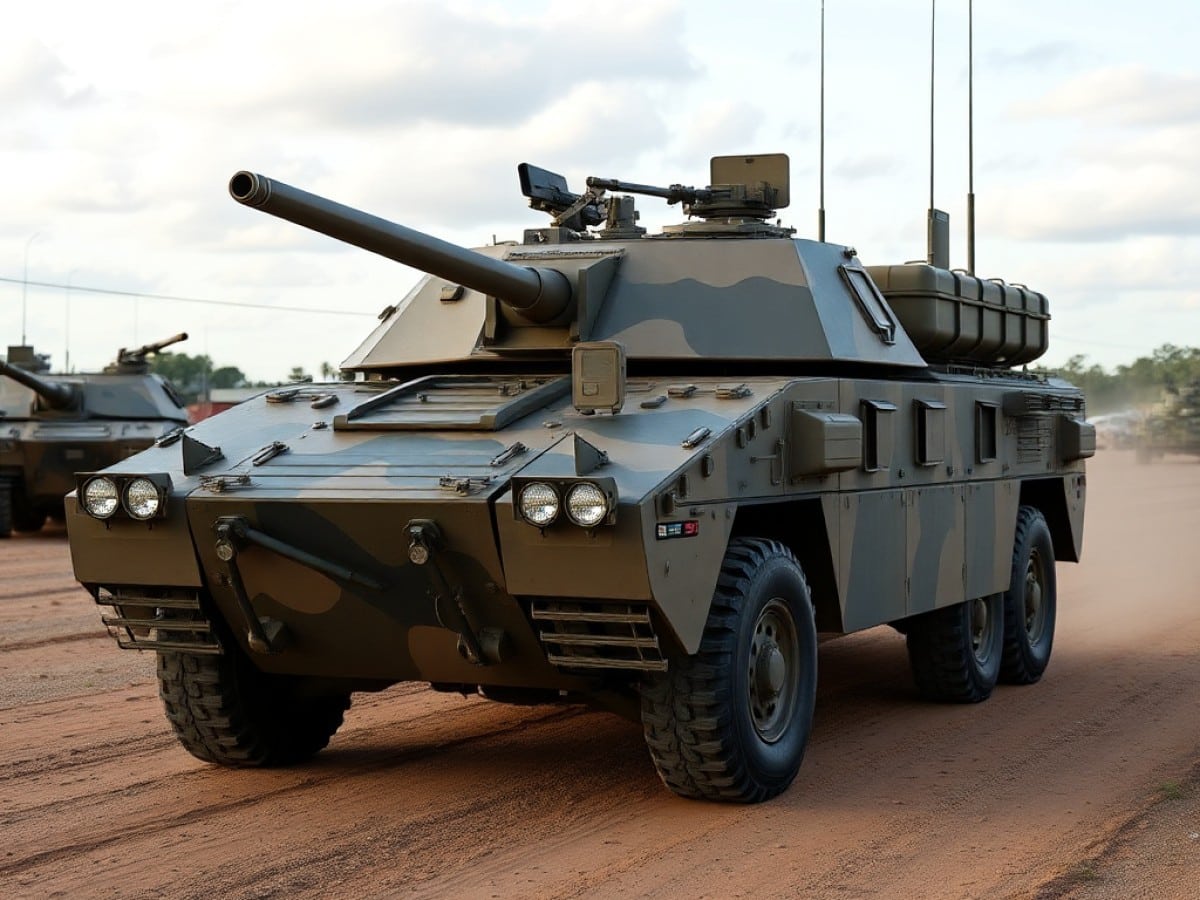
The first Hanwha AS9 Huntsman self-propelled howitzer has been delivered to Townsville, with the Hanwha AS21 Redback infantry fighting vehicles scheduled to arrive next year. Following that, Rheinmetall’s Boxer 8×8 combat reconnaissance vehicles will start to replace the long-serving ASLAVs in 2028.
McLennan noted that the inventory of M88A2 recovery vehicles has tripled during his two-year tenure, and the armored logistics battalion will be expanded by adding a subunit by year’s end.
The brigade is also increasing its deployment of aerial drones for logistics, surveillance, and attack purposes, and will soon introduce unmanned ground vehicles, including variants capable of entering minefields to clear safe passages.
These new weapon systems necessitate enhanced rearming capabilities. McLennan discussed the need for robust logistics units capable of managing heavy and diverse types of ammunition, including 30mm rounds, Spike LR missiles, various 155mm shells, and significantly more 12.7mm ammo.
He explained that the brigade’s expansion in ammunition handling capabilities would increase from about 30 pallets per day to 105, assuming high-intensity combat operations involving all equipment. This marks a major transformation in operations.
Advancements in Artillery
The brigade’s 4th Regiment of the Royal Australian Artillery is transitioning from M777A2 towed howitzers to the AS9 Huntsman. The first of these 155mm self-propelled howitzers was delivered to 106 Battery in late May, with plans for each battery to eventually have six AS9s and three AS10 armored ammunition resupply vehicles by the end of 2027.
This change significantly enhances the regiment’s capabilities, increasing their firepower, mobility, and protection by at least 300%, according to McLennan.
Maj. Fergus Robinson, commander of 106 Battery, emphasized the challenges of vehicle maintenance, stressing the importance of soldiers taking responsibility for their vehicles and weapon systems.
With the introduction of the hefty 48-ton AS9s and their supporting AS10s, the 4th Regiment is receiving M88A2 Hercules recovery vehicles for the first time. Maj. Robinson noted the necessity of developing skills to confidently manage these vehicles under challenging conditions such as nighttime operations or active combat.
Expanding Base Infrastructure
The expansion in capabilities necessitates new infrastructure at Lavarack Barracks, the brigade’s base in Townsville. McLennan discussed the upcoming inauguration of a top-tier common user facility, which he claims will be among the most modern globally, dedicated to servicing all vehicle fleets with light- and medium-grade repairs.
The artillery regiment recently opened a new maintenance hangar equipped with a 10-tonne gantry crane, facilitating major vehicle repairs. Additionally, new range facilities are being constructed at the Townsville Field Training Area to support the armored brigade’s essential training tasks.
Increasing Lethality
While some global army units are shifting towards lighter, more mobile configurations, Australia’s 3rd Brigade is moving in the opposite direction. McLennan explained to Defense News that the integrated arms fighting system, encompassing tanks, armored engineering vehicles, and self-propelled artillery, remains highly relevant and is adapting to new threats and technologies to reach unprecedented potential.
He emphasized the brigade’s intense focus on this transformation, drawing lessons from others who routinely engage in such operations.
In addition to transforming the 3rd Brigade, the Australian Army is also developing a Littoral Maneuver Group, enhancing its 10th Brigade with HIMARS and NASAM systems, and introducing the AH-64E Apache helicopter.
Similar Posts:
- Australian Army Boosts Power: Scores New Tanks and Howitzers in Massive Upgrade!
- Army Transformation: Infantry Brigades Shift to Mobile Units for Enhanced Combat Readiness
- Australian Abrams Tanks Deployed in Ukraine: A Game-Changing Military Boost
- Canada Invests $1.4 Billion in Local Production of Armored Vehicles: Boosting Defense and Economy
- Ukraine Boosts Robot Production: Saving Soldiers, Transporting Ammo, Rescuing Civilians

Jamal Peterson reports on defense, aerospace, and tech policy. With a military background and a strategic mind, he dissects complex subjects with clarity, offering readers sharp, reliable insights.