VIENNA — European nations have been alerted by the CIA about a potential Russian scheme to deploy Gerbera-type drones from commercial ships in the Mediterranean, according to recent findings.
The Spanish newspaper El Mundo reported this development, citing information from an unnamed Lithuanian intelligence insider, late on Wednesday evening.
The report suggests that the CIA believes that Spain, France, or Italy could be possible targets for these drone attacks, which would be initiated from international waters and could reach their targets within one to two hours.
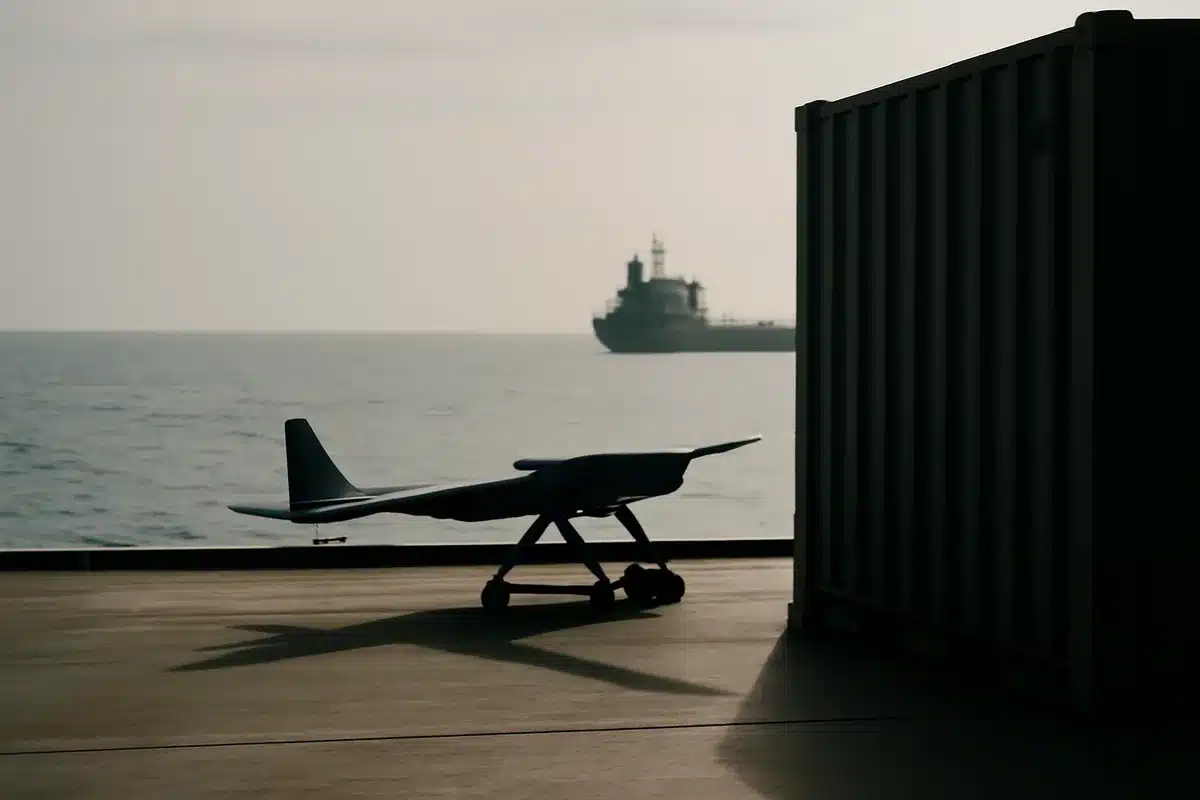
Chosen for its compactness, the Gerbera drone has a wingspan of merely 2.5 meters, making it easy to conceal, as noted by El Mundo. These drones can travel up to 600 kilometers, depending on their payload and the weather conditions, and are equipped with a small warhead capable of igniting fires, damaging vulnerable infrastructure, or triggering socio-political and economic chaos.

It was further revealed that these drones are concealed within containers, making their transport straightforward, before being launched by catapult for their missions targeting NATO members in the Western Mediterranean, as per sources cited by El Mundo.

This threat was communicated to Lithuania and other European states shortly after the CIA director’s covert trip to Moscow via a U.S. military aircraft on August 25.
El Mundo indicated that a crucial CIA document was being discussed among European leaders around mid-September, aligning with French President Emmanuel Macron’s assembly of the Defense Council on September 16, followed by meetings with all political party leaders and presidential candidates for 2027 at the Élysée Palace two days later.
The authenticity of the El Mundo report has yet to be independently verified.
The anticipated risk of Russian aggressive activities has seen a notable rise across European capitals this year, linked to increased acts of sabotage and unconventional warfare tactics generally attributed to Russia. Violations of airspace by Russian drones near NATO’s eastern boundaries have become more frequent, resulting in several incidents where the alliance’s fighter jets have had to down these unmanned aerial vehicles.
Last year, an unprecedented incident occurred when 19 unarmed Russian drones entered Polish airspace, considered a deliberate provocation and a test of NATO’s readiness.
The use of Russian commercial vessels for launching drones has long been a suspicion in European security circles, with unidentified UAVs occasionally observed near Russian “shadow fleet” ships. In February, a Swedish naval ship managed to jam a drone launched from a Russian intelligence vessel in the Öresund Strait, coinciding with the French aircraft carrier Charles de Gaulle’s visit to Sweden.
An escalation occurred in early August when a drone armed with explosives was discovered near a Ukrainian cargo plane and another aircraft collided with a drone at Leipzig airport in Germany, a major NATO logistics center. After investigating for a month, German officials attributed the incident to Russia.
On September 19, a prominent pro-Russian Telegram channel, Rybar, released a map provocatively titled “Russian medicine against French arrogance,” proposing the supply of Geran-5 drones to Algeria for potential strikes on French aerospace facilities, military bases, nuclear sites, and petrochemical installations, according to El Mundo.
Even non-NATO, inland European nations are heightening their vigilance and defensive preparations. The Austrian military has commenced a “major exercise” to enhance counter-drone capabilities and air defense strategies, reported by Austrian public broadcasters on Thursday. This exercise will involve 300 troops deployed across various towns in eastern Austria, incorporating Mistral surface-to-air missiles, 35mm cannons, and electronic warfare tactics.
Similar Posts:
- Swedish Navy Captures Russian Drone Near French Carrier: Tensions Rise in Baltic Sea
- Estonian Intelligence Confirms: Europe’s United Defense Strategy is Effective
- Lithuania and Sweden Test Advanced Weapons Against Agile Drones: A Show of Aerial Defense Might
- Finland Shuts Airspace, Limits Sea Traffic Near Russia: Drone Threats Escalate
- CIA Director Reveals: Russian Troops Last Only 20-30 Minutes in Ukraine Frontline Combat

Jamal Peterson reports on defense, aerospace, and tech policy. With a military background and a strategic mind, he dissects complex subjects with clarity, offering readers sharp, reliable insights.