NEW DELHI — India has recently introduced a nuclear-powered ballistic missile submarine into its naval fleet and is nearing completion of a substantial $8 billion agreement with Germany to acquire six conventional submarines, aiming to significantly enhance its naval capabilities in response to the increasing presence of Chinese naval activities in the Indian Ocean.
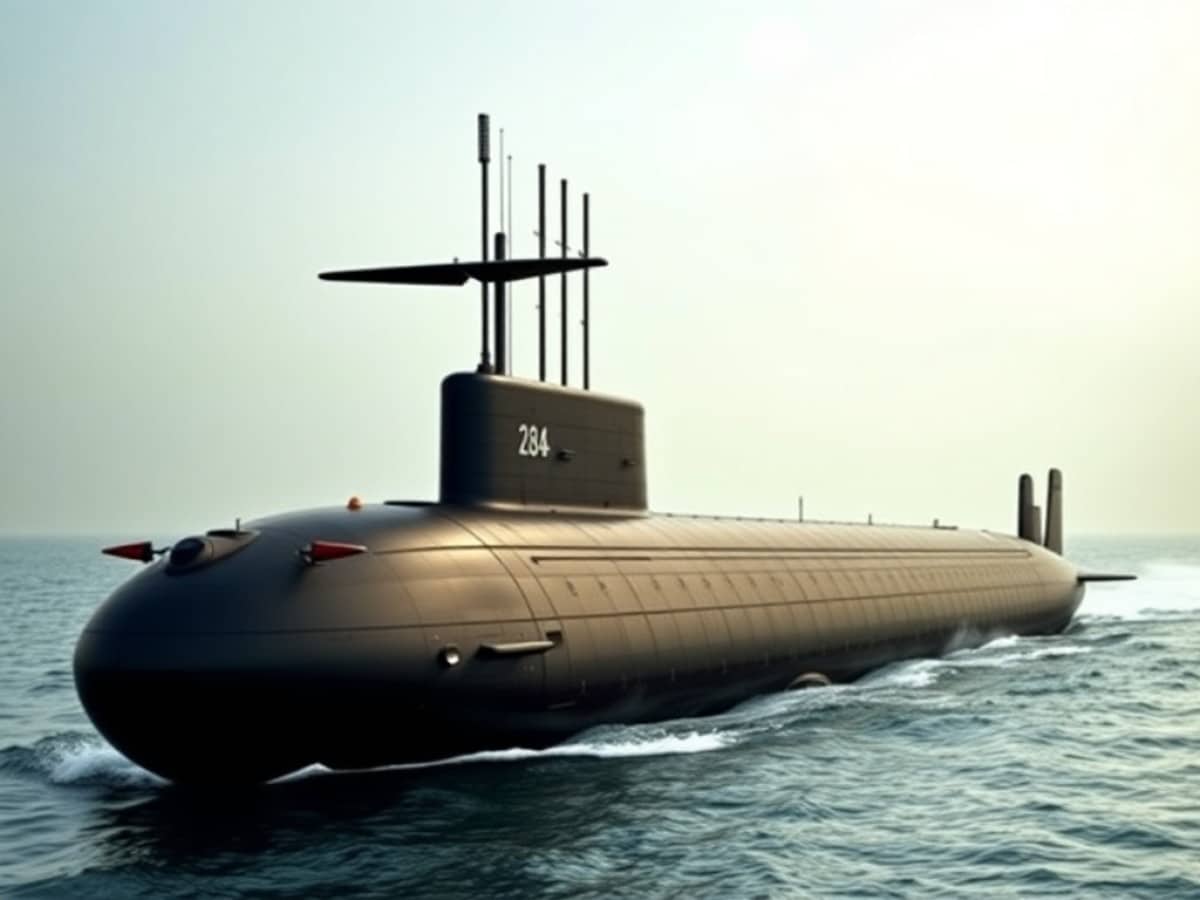
The INS Aridhaman, India’s third nuclear-powered ballistic missile submarine (SSBN), was quietly commissioned earlier this month. Defense Minister Rajnath Singh announced the induction on X with a message stating, “Aridhaman isn’t just a word, it is power.”
Maritime experts believe that this new addition will bolster India’s nuclear deterrence capabilities in the sea, ensuring that there is always one submarine deployed at sea while others may be undergoing maintenance or in transit.
“To maintain a credible second-strike capability, having at least one submarine continuously at sea is crucial for effective sea deterrence. With three SSBNs available, we can ensure this continuous presence,” explained retired Commodore Anil Jai Singh, a submarine expert and vice president at the Indian Maritime Foundation.
This indigenously constructed submarine is technologically more advanced than its predecessors, capable of carrying missiles with longer ranges. According to the Times of India, it displaces 7,000 tons and can hold twice as many missiles as its earlier counterparts. It is equipped to carry up to 24 missiles with ranges between 750 to 1,500 kilometers and eight missiles that can reach up to 3,500 kilometers.
Although the longer-range K-4 missiles have undergone tests, they have not yet been deployed operationally.
SSBNs are deemed vital for India, which adheres to a “no-first use” policy regarding nuclear weapons. These submarines are key to ensuring a potent retaliatory capability if an initial strike occurs.
“Nations like China have capabilities to neutralize land-based nuclear arsenals using conventional weapons. For India, losing its nuclear deterrent in a first strike would be catastrophic,” stated retired Rear Adm. K. Raja Menon, a maritime strategist and submarine expert based in New Delhi, in an interview with Defense News. “The most reliable platform for a guaranteed second-strike today remains the nuclear ballistic submarine.”
India is also currently constructing a fourth SSBN, expected to be commissioned next year.
Additionally, India is finalizing negotiations to purchase six advanced stealth submarines from Germany for approximately $8 billion, potentially marking one of the largest defense acquisitions for the country.
These submarines will feature Air-Independent Propulsion (AIP) systems, a first for India, enhancing the Indian Navy’s ability for extended underwater operations and stealth.
The AIP technology enables conventional submarines to stay submerged longer without needing to surface for air, thus evading detection by enemy forces. This capability is particularly advantageous in the expansive Indian Ocean, allowing operations further from the Indian coastline.
The project involves collaboration between the German shipyard TKMS and India’s state-owned Mazagon Dock Shipbuilders Ltd., with construction planned in India.
During a recent visit to Germany, Indian Defense Minister Rajnath Singh toured the TKMS facility in Kiel alongside his German counterpart. After the visit, German Defense Minister Boris Pistorius expressed optimism about signing the deal within the next three months, stating, “I am very, very confident that I will be able to sign it soon.”
This potential deal, pending approval from India’s Cabinet Committee on Security led by Prime Minister Narendra Modi, would be the first instance of Germany transferring submarine production technology to a non-European nation. The urgency of this acquisition has increased due to escalating geopolitical uncertainties, according to analysts.
With several of the Indian Navy’s 17 submarines nearing the end of their operational life and facing a significant shortfall, and with China rapidly increasing its own fleet of over sixty submarines, including nuclear-powered ones, the stakes are high for India to maintain a robust and modern naval force.
India, having a strategic position with a vast 7,500-kilometer coastline along a major maritime trade route, recognizes the importance of commanding the Indian Ocean and is determined not to cede control to any external powers, particularly China, which relies on these waters for a significant portion of its trade.
India’s naval strategy is not limited to expanding its submarine fleet; it also includes the induction of the stealth frigate INS Taragiri, equipped with advanced missile systems like the BrahMos cruise missiles and medium-range surface-to-air missiles, enhancing its surface fleet’s combat and stealth capabilities.
With 15 warships slated for induction this year, the highest number to date, India’s naval chief, Adm. Dinesh Kumar Tripathi, emphasized that the focus remains on enhancing critical war-fighting capabilities, particularly in anti-submarine and under-sea warfare, to ensure the security of India’s maritime interests.
Similar Posts:
- How an Ohio-Class Submarine Became Key in the Iran Strike Operation
- US Navy Launches Trident Missiles: Demonstrates Nuclear-Capable Firepower in Test
- Iranian Warships Seek Refuge: Strategic Moves in India and Sri Lanka
- Navy’s Massive $76.6 Billion Deal: Boosting Virginia and Columbia-class Submarines
- China’s Armed Forces Aim to Neutralize US Submarine Detection System: Experts Reveal

Jamal Peterson reports on defense, aerospace, and tech policy. With a military background and a strategic mind, he dissects complex subjects with clarity, offering readers sharp, reliable insights.