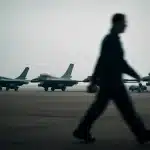
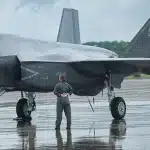
In March 2025, the U.S. conducted a simulation to explore strategies for protecting its military bases against drone attacks.
A mere three months after this theoretical exercise, the scenario turned alarmingly realistic. In June 2025, Ukraine initiated Operation Spiderweb, during which Ukrainian operatives infiltrated Russia with hundreds of drones, subsequently coordinating an attack that devastated between 20 and 40 Russian aircraft across five airbases from Moscow to Siberia.
The impact of this operation went beyond the loss of Russian military aircraft and a blow to national pride. The images of destroyed bombers, captured by the drones themselves, broadcasted a stark warning globally: such an attack could befall any nation, including the U.S.
Since 2022, the U.S. Army’s Joint Counter-Small Unmanned Aircraft Systems Office (JCO) along with the RAND Corporation have conducted six strategic simulations focused on countering drone threats.
“Our objective is to assess the existing policies and authorities that prevent us from adequately responding to scenarios like Operation Spiderweb,” explained Paul Lushenko, an assistant professor at the U.S. Army War College who was involved in these simulations.
While many specifics of these simulations remain classified, one clear takeaway is that protecting domestic bases is not solely a military responsibility.
“The simulation underscored the necessity of a framework that integrates and coordinates support from state, local, tribal, and territorial authorities in drone countermeasures around military facilities,” according to an analysis by the simulation’s creators. This approach, however, introduces several challenges related to jurisdiction and communication.
Operation Spiderweb served as a stark reminder that the proliferation of small, easily transportable drones has made even remote military installations vulnerable to attacks. Historically, U.S. bases have been insulated by vast oceans and lacked proximate adversaries, their main threats being terrorist attacks or isolated breaches.
However, the threat landscape began changing as early as 2016 when the Islamic State’s use of weaponized drones in Iraq unsettled U.S. commanders. This was followed by a series of mysterious drone flights over Langley Air Force Base in 2023, which, while harmless, sparked concerns about hostile drones in American airspace. By 2024, there were 350 recorded drone flyovers over U.S. military sites, attributed mostly to hobbyists but also raising the possibility of hostile intent.
Initially, the JCO/RAND simulations focused on the technical aspects of drone defense. However, the March 2025 exercise delved into more complex issues such as the assignment of responsibility and authority for defending bases against drones.
“Imagine a scenario where a drone is flying over the Potomac and is cleared by the FAA. How would the Pentagon know?” posed Christopher Pernin, a RAND researcher. “They would need to verify it quickly, and time is of the essence.”
The March simulation also explored how U.S. Northern Command could coordinate defense against drones at military bases and emphasized the importance of interagency data sharing and the use of counter-drone technologies like GPS jamming.
Using Fort Bliss in Texas and Joint Base Pearl Harbor in Hawaii as hypothetical targets, the simulation presented scenarios where the defense faced drone attacks from various directions and altitudes. This scenario facilitated discussions among over 100 participants from more than 30 federal and state agencies, marking it the largest interagency tabletop exercise in five years, according to Lushenko.
The simulation concluded that NORTHCOM could support anti-drone efforts under certain conditions, such as overwhelming drone incursions, simultaneous attacks at multiple bases, and situations undermining public trust in the military.
Additionally, the concept of “flyaway kits” was endorsed. These are mobile counter-drone systems with trained personnel that can be rapidly deployed. The National Guard, particularly its Civil Support Teams, was identified as potentially playing a vital role in this defense due to their readiness and budgetary capabilities.
“We are exploring creative ways to leverage our state military resources through the National Guard to respond to drone threats,” added Lushenko.
The defense of military bases involves not only technological solutions but also legal considerations. For instance, under Section 130i of Title 10 in the U.S. Code, base commanders have the authority to engage drones, though the rules can vary significantly across the roughly 500 U.S. military installations.
“At some bases, the directive is clear—no drones allowed, and all measures are permissible. However, not all bases have such definitive guidelines, which can lead to hesitancy in responding to drone sightings,” explained Pernin.
Ultimately, these wargames proved invaluable in fostering communication across various agencies, revealing misunderstandings and clarifying roles.
“The discussions we had were eye-opening. Often, we discovered that responsibilities we assumed belonged to one agency actually did not,” Pernin reflected on the collaborative nature of the exercise.
Similar Posts:
- Ukraine Ready for Russian Retaliation After Drone Incident: Defense Minister Pistorius Confirms
- Ukraine Drone Strikes: A Wake-Up Call for US Air Defense!
- CIA Alert: Russian Drone Attacks from Mediterranean Vessels Threaten Europe!
- Finland Shuts Airspace, Limits Sea Traffic Near Russia: Drone Threats Escalate
- Kyiv’s Drone Strategy Influences US: Top Ukrainian Official Predicts Moscow Will Be Next

Jamal Peterson reports on defense, aerospace, and tech policy. With a military background and a strategic mind, he dissects complex subjects with clarity, offering readers sharp, reliable insights.