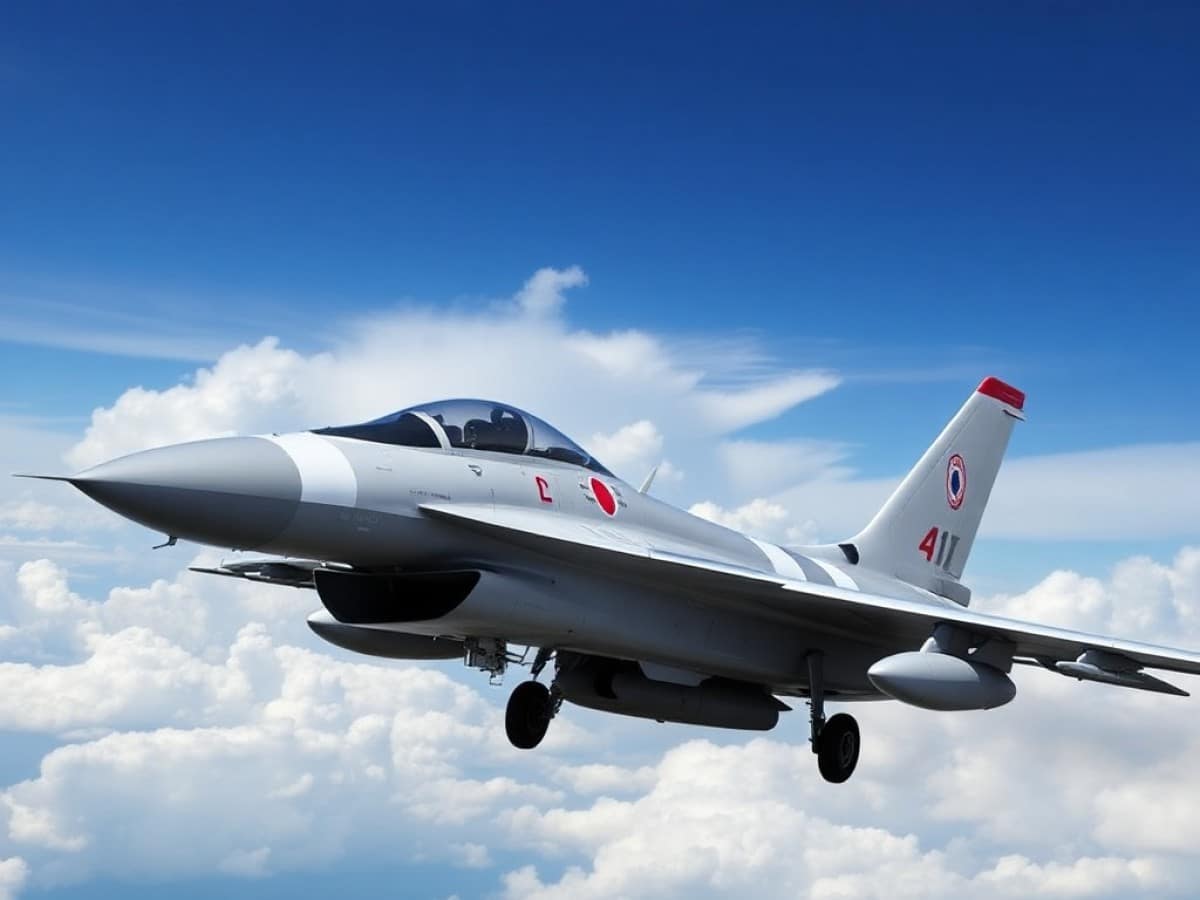
FARNBOROUGH, England, July 17 (Reuters) — The Farnborough Airshow in Britain is set to place a significant emphasis on defense this year due to escalating global security concerns. This shift comes as manufacturers in the aerospace and arms industries face increasing challenges to meet the rising demand for military equipment, while also trying to stabilize the recovery of the civil aviation sector in terms of jets and engines production.
Amid the ongoing conflict in Ukraine, now in its fifth year, and the collapse of a ceasefire in the Gulf, the focus on defense is expected to overshadow the usual race between Boeing and Airbus for commercial jet orders during the airshow, scheduled for July 20 to 24.
“Today’s global security landscape is perhaps the most complicated and unpredictable in decades, with security threats evolving rapidly,” stated Air Chief Marshal Harv Smyth, leader of the Royal Air Force, at an International Air Chiefs Conference preceding the airshow.
Arms manufacturers are noticing the largest surge in European defense expenditure since the Cold War era. However, there remains uncertainty about the allocation and specific usage of these funds.
A leading figure in the industry highlighted the transformative impact of drones and artificial intelligence on defense strategies, comparing it to how SpaceX revolutionized space launches. This change comes as recent conflicts in Ukraine and Iran demonstrate an urgent need for rapid development and large-scale production in defense technologies.
Tom Enders, former CEO of Airbus and now co-chairman of German defense startup Helsing and head of the foreign policy think tank DGAP, noted, “I am familiar with both sectors, and they are worlds apart. Traditional defense companies have been notoriously conservative, only acting when there is government funding. In contrast, newer companies are bold and invest their own resources, something that procurement agencies and armed forces are starting to appreciate for fostering a dynamic and responsive industry.”
Despite some investments being directed towards conventional platforms like the Lockheed Martin F-35 and the Eurofighter, which will both be featured at the airshow, companies such as Helsing and Anduril in the U.S. are advancing AI-driven technologies like autonomous fighter drones, despite some early obstacles.
“Valuations are increasingly favoring new entrants in the defense market, but the majority of military spending still goes to manned aircraft,” observed Byron Callan, managing partner at Capital Alpha.
The show’s organizers have indicated that defense will account for half of the record 1,600 exhibitors, a significant increase from the historical 40%, with a notable rise in participants from the AI, deep-tech, and financial sectors.
Sales of Commercial Jets and Supply Chain Dynamics
On the commercial front, Airbus and Boeing are anticipated to announce new orders and reveal the customers for some previously undisclosed deals.
However, with most delivery slots booked well into the next decade, the flurry of media announcements may draw less attention than usual. Instead, the focus will likely shift to aircraft deliveries, which are more profitable for manufacturers.
While airshows can still bring surprises, industry insiders suggest that the total number of deals might not exceed 300 aircraft, a figure significantly lower than some pre-show estimates of up to 800 jets. This count may also include previously announced agreements.
Additionally, Air China has announced an order for 55 Airbus jets.
“Securing orders is no longer the primary benchmark, given the constraints on production capacities,” stated Jerrold Lundquist, managing director of The Lundquist Group.
The aerospace sector has faced supply chain issues since the pandemic, particularly with castings and forgings, which are essential components manufactured to precise standards.
Addressing these challenges is crucial for Airbus to achieve its target of increasing single-aisle jet production by about 25% to 75 planes per month by 2027. Meanwhile, Boeing is exploring options to boost production to regain market share and stabilize its position against Airbus.
“While there has been some improvement in the supply chain compared to a few years ago, it’s still not at a level that would enable Airbus to meet its production goals,” explained manufacturing expert Kevin Michaels, managing director of AeroDynamic Advisory. “And as Boeing increases its production rates, it could face similar challenges.”
Issues with engine deliveries and interiors remain persistent supply chain problems. Nonetheless, the airshow is expected to start on an optimistic note from the world’s largest engine maker, with GE Aerospace CEO Larry Culp commenting to Reuters, “The supply chain has really turned a corner, though there’s still more work to do.”
Similar Posts:
- Boeing’s MQ-28 Ghost Bat Debuts: See the Future of Drones at Farnborough Airshow!
- German, Spanish Firms Unite to Save Pioneering FCAS Fighter Tech: A Race Against Time
- $131 Billion Deal Sealed: Boeing to Ramp Up F-15 Production, Modernization
- Anduril Targets Poland: Autonomous Aircraft Pitch for F-35, Apache Enhanced Capabilities!
- Paris Air Show Spotlight: Defense Takes Center Stage Amid Global Conflict Concerns

Jamal Peterson reports on defense, aerospace, and tech policy. With a military background and a strategic mind, he dissects complex subjects with clarity, offering readers sharp, reliable insights.