
Boeing Unveils Cost-Effective Radar Seeker at Defense Symposium
At the Space and Missile Defense Symposium that commenced in Huntsville, Alabama, Boeing introduced a new budget-friendly radar seeker on Tuesday. The corporation markets this technology as a cost-efficient solution to enhance missile guidance systems across a broader array of armaments.
The radar seeker, which is integrated into the forefront of a missile or bomb, actively identifies and directs the munition towards its intended target. Typically, seekers represent one of the priciest components in guided munitions, and Boeing suggests that their high cost has restricted military purchase volumes.
Features of Boeing’s Innovative Seeker
Known as the Ultra Low-Cost Seeker (ULCS), this device is an active seeker that generates its own radar signals instead of depending on external sources from aircraft or ground systems. The ULCS is crafted predominantly from commercially available parts that have been modified for military applications, though it is still under development.

Boeing envisions potential applications of the ULCS across various platforms, including air and missile defense interceptors, guided bombs, and cruise missiles. The design of the ULCS is versatile, allowing for its use across different weapons without the need for weapon-specific seekers.
The company has designed the seeker to operate effectively from air, land, and sea platforms, in all weather conditions, and against mobile targets. Boeing conducted multiple tests on the ULCS earlier this summer to validate its performance.
Testing and Performance Validation
In testing scenarios, the ULCS’s design was evaluated in an anechoic chamber designed to eliminate signal interference, ensuring precise readings. Additionally, the seeker was tested in flight aboard a Beechcraft 1900, where it successfully identified and tracked targets over various terrains.
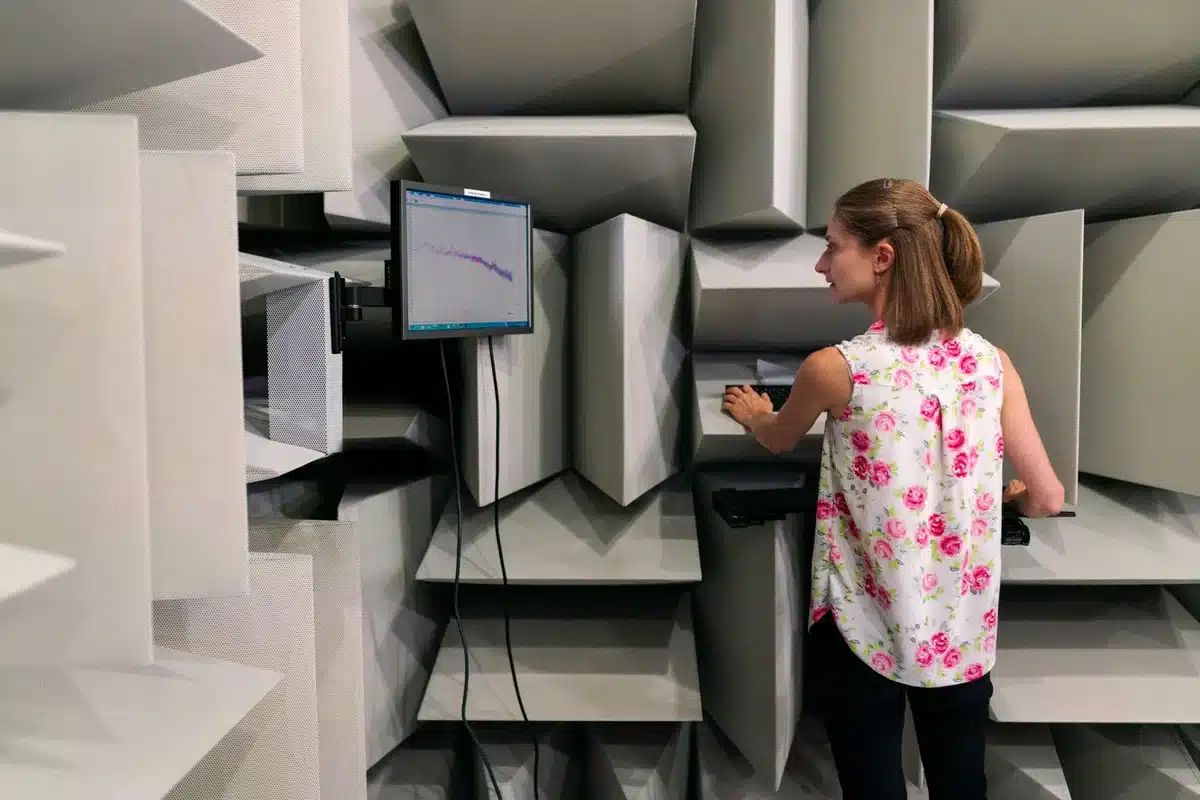
Further tests were conducted at Spaceport America in New Mexico, where the ULCS tracked a drone from a stationary ground position. It was later mounted on a rocket, simulating a missile scenario, where it engaged a second drone equipped with a radar reflector. Throughout these tests, the seeker endured the stresses of launch, including high acceleration and vibration, while consistently detecting and tracking its targets.
Boeing stresses the reuse potential of the ULCS across different weapons systems as a primary benefit of the technology.
“By developing the ULCS with a shared sensor architecture, we aim to standardize this technology across multiple defense programs,” explained Bob Ciesla, vice president of Boeing Precision Engagement Systems. He highlighted the modular and open-standard design of the seeker, which facilitates its integration and future modifications across various weapons without the need for complete redesigns.
Boeing, which also produces seekers for other defense applications, including some for competitor Lockheed Martin, drew from its experience with the PAC-3 Missile Segment Enhancement interceptor’s active radar seeker. The goal with the ULCS is to create a more affordable solution for engaging less advanced threats.
Steve Wright, Boeing’s senior manager for weapon sensors and advanced guidance, acknowledged that development is ongoing. “There’s more work ahead, but the rapid testing completed by our teams demonstrates the tangible benefits of this technology, which will revolutionize how we approach affordability in seeker technology across our projects,” he stated.
Boeing’s teams are currently analyzing test data and planning further trials for 2027, aiming to replicate more realistic operational conditions.
Industry Trend Towards Modular Technology
Boeing is not alone in exploring modular technology. On August 10, Lockheed Martin announced its Strigo program, which also focuses on modular radio-frequency sensors, missile datalinks, and seeker technologies for various weaponry.
Details regarding the internal or external funding of Boeing’s ULCS or its exact cost remain undisclosed.
Similar Posts:
- RTX Unveils Groundbreaking Radar for MDA: Tracks Hypersonic Weapons with Precision!
- Boeing Wins Big: Selected to Build US Navy’s Next-Gen F/A-XX Fighter!
- Australia Readies for ‘Ghost Bat’ Warplane Drones: A New Era in Military Technology!
- NATO Shakeup: European Allies Cancel Plans to Purchase Boeing E-7 Wedgetail AWACS
- Saab Unveils Drone-Killing Missile: Cost-Effective Defense Solution in the Works

Jamal Peterson reports on defense, aerospace, and tech policy. With a military background and a strategic mind, he dissects complex subjects with clarity, offering readers sharp, reliable insights.