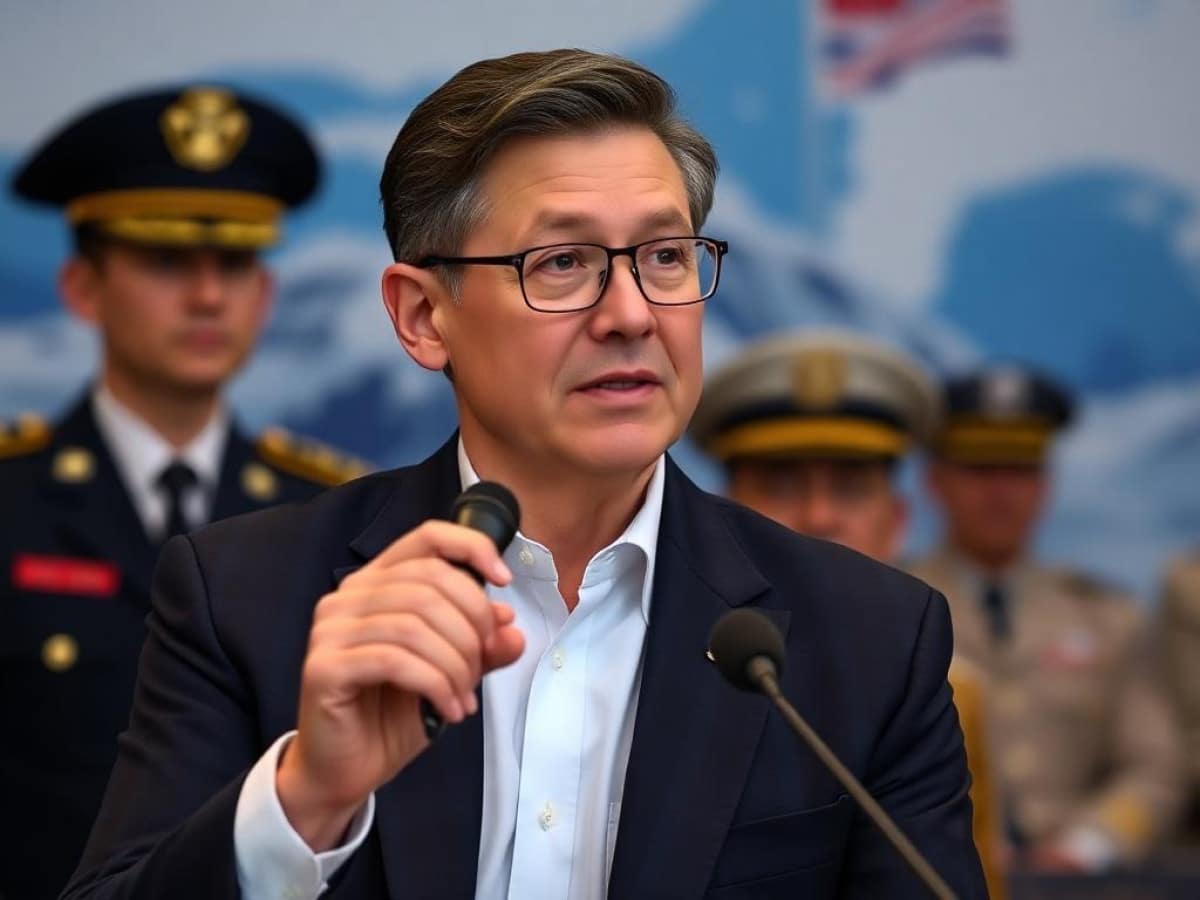
SINGAPORE — At the conclusion of Pete Hegseth’s address at the Shangri-La Dialogue, the premier defense summit in Asia, the U.S. Defense Secretary suggested that certain attendees should redirect their focus.
“Preferably, we would see the majority of European investments concentrated within their own continent,” he remarked during a Q&A session.
Hegseth’s comments touched upon a central theme at a meeting usually centered on Asian security issues. Since the onset of the Ukraine conflict in 2022, an increasing number of Europeans have journeyed to Singapore annually, demonstrating their growing commitment to a region they see as crucial to their own interests.
Initially, the United States welcomed this European attention — a stance that has shifted with the second Trump administration. Skepticism over European military involvement in Asia has grown within segments of the U.S. government, with some Pentagon policy makers actively discouraging it.
Despite this, the conference saw unprecedented European participation last week, featuring a keynote by French President Emmanuel Macron. Many officials from both Europe and Asia defended Europe’s involvement in Asian affairs, a point Hegseth himself acknowledged in his speech.
The challenge, according to officials, lies in defining Europe’s role during a time when the ties between the two regions are seen as increasingly interconnected and the U.S. prefers its allies to concentrate on their immediate surroundings.
“This is a convergence zone right now,” mentioned Gilberto Teodoro, the Philippines’ secretary of national defense, in an interview. “This Shangri-La Dialogue is unique in witnessing significant European and American advocacy.”
‘Clearly Concerned’
At last year’s conference, the unexpected visit of Ukrainian President Volodymyr Zelenskyy, who met with then-Defense Secretary Lloyd Austin, underscored a newly shared perception of security between the regions. The involvement of North Korea in the Ukraine war alongside Russia, China’s support for the Kremlin’s military efforts, and Western reactions to Russia’s actions were viewed as indicative of potential responses to similar scenarios around Taiwan.
“If Russia is allowed to annex a part of Ukraine without any global repercussions, what does that imply for Taiwan?” Macron posed in his address.
This perspective had also dominated Washington’s outlook until recently, urging European allies to take the Chinese threat seriously while supporting Ukraine. Over the past year, nations from Britain to Italy have dispatched naval forces to the Indo-Pacific, including the Taiwan Strait, showcasing their military commitment to the region.
However, this demand diminished with Donald Trump’s election, as his administration urged Europe to shoulder a greater responsibility for its own defense, enabling the U.S. military to focus more on the Pacific.
Still, Hegseth left the door open for European military engagement in Asia as part of broader efforts to deter China — a strategy that U.S. military leaders consider advantageous.
“There is merit in the fact that China factors in the possibility and often disfavors the presence of other nations,” Hegseth explained. “If this is part of their strategic calculations, it’s beneficial.”
A U.S. defense official, speaking anonymously, confirmed, “They’re clearly concerned about European presence,” referring to Beijing.
Different Roles
Some allies echoed Hegseth’s sentiment at the conference, advocating for Europe to focus primarily on defending its own territory.
Finland’s Defense Minister Antti Häkkänen highlighted his country’s main security concerns: an extensive border with Russia and strategic interests in the Arctic and Baltic Sea. “That’s why our role in the Indo-Pacific cannot be substantial,” he stated during an interview.
Nevertheless, Häkkänen was in Singapore to discuss defense industry collaboration and intelligence sharing with partners like Singapore and South Korea, which he sees as natural areas of cooperation, albeit without committing significant military resources.
Similarly, Sweden’s Defense Minister Pål Jonson emphasized the importance of intelligence partnerships and weapons sales, but also stressed the global relevance of the situation in Ukraine. “We are here to argue why it is vital to uphold Ukraine’s territorial integrity and freedom,” Jonson remarked.
Countries in the Indo-Pacific like South Korea, Australia, and New Zealand have supported Ukraine with military aid and training for the past three years, viewing Russia’s invasion as a test of the international community’s resolve.
Judith Collins, New Zealand’s Defense Minister, mentioned ongoing efforts to train Ukrainian forces and potential participation in peacekeeping missions should a peace agreement be reached. Following a significant increase in defense spending, New Zealand aims to allocate 2% of its GDP to military expenditure by the early 2030s, reflecting a broader intent to take greater responsibility for its own security, irrespective of international partnerships.
“A NATO minister told me about their NATO-first policy,” Collins shared. “My response was, ‘What does that mean for us?’”
“The answer is: doing more on our own and with our regional partners while also contributing to peace in Europe,” she concluded.
Similar Posts:
- Pentagon Endorses Europe’s Defense Spending Strategy: Boosting Local Military Investments!
- Italy Blocks US Arms Deal for Ukraine: Aid Scheme Rejection Sparks Debate
- US-Vietnam Arms Negotiations Hang in Balance: Post-Hegseth Visit Update
- Ukraine Seeks EU Funding for First Patriot Missiles Purchase: A Strategic Defense Move
- NATO Commander Warns: Rising Russian and Chinese Threats in Arctic Escalate Tensions!

Jamal Peterson reports on defense, aerospace, and tech policy. With a military background and a strategic mind, he dissects complex subjects with clarity, offering readers sharp, reliable insights.